
Off The Brake
Coaching for Ambitious Creatives Who Are Too Smart to Be This Stuck
You know exactly what you should be doing to reach the next level. So, why aren’t you doing it?
The Loop of "Almost"
You are talented. You are ambitious. You have the vision, the skills, and the drive.By all reasonable measures, you should be further along than you are.But you're not.Instead, you feel stuck in a loop of "almost." You see the next summit clearly — the income, the impact, the recognition — but every time you get close, something pulls you back.
The Trap of "More"
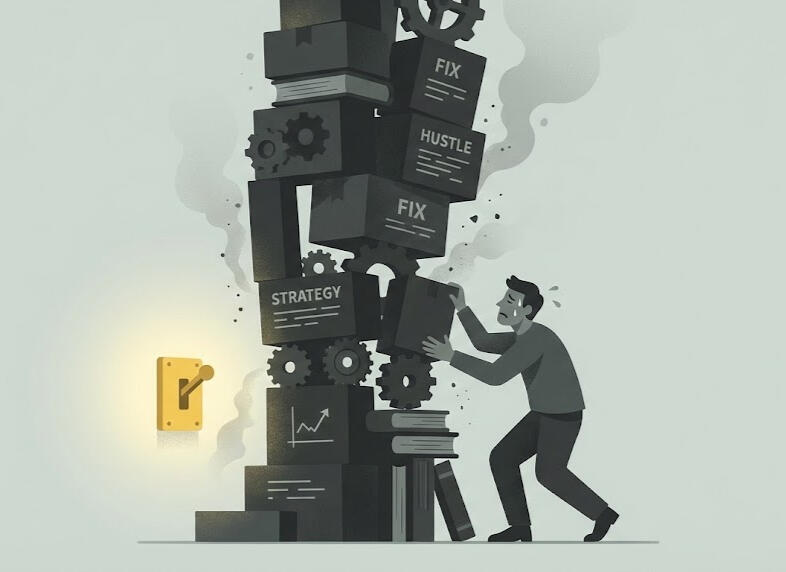
Look at what you're actually doing when you feel stuck:
You push harder, pull longer hours, try to brute-force your way through the plateau. The hidden assumption? "I'm lazy. I just need more discipline." That's the Hustle Trap.
You buy another course, refine the business plan, optimize the workflow — always searching for the missing piece. The hidden assumption? "I'm not smart enough. I need the right strategy." That's the Strategy Trap.
You dive into more self-improvement, more analysis, hunting for the part of you that's holding you back. The hidden assumption? "Something is broken in me. I need to fix it." That's the Self-Fix Trap.
You seek validation before every move, poll everyone — trying to accumulate enough approval to act. The hidden assumption? "I can't trust my own judgment." That's the Permission Trap.
You over-give, over-help, become indispensable — always taking care of others before yourself. The hidden assumption? "I haven't earned the right to focus on my own work." That's the Service Trap.
Notice what all five have in common: each one says something is missing inside you. Not enough discipline. Not enough intelligence. Not enough wholeness. Not enough trustworthiness. Not enough selflessness.So you try to add from the outside. More effort. More knowledge. More healing. More approval. More service.But no matter how much you add, it's never enough. The gap stays.
The Way Out

Here's what's strange: If something were truly missing, adding it would close the gap. Take the course, do the healing, get the approval — done, gap closed. But you've added. A lot. And the gap? Still there. So either you haven't added enough yet... or the gap was never actually a gap.What if the worth, the capability, the wholeness you're chasing is already in you — just offline, disconnected a long time ago, for reasons that made sense then. That would explain everything: why the adding never works, why the hunger never stops, why you can feel so stuck despite doing all the right things.Finding your way out of the loop of "almost" doesn't require adding more. It requires releasing the brake — and reclaiming the resourcefulness that's been there all along, ready to carry you forward.
The Invitation
I work with Ambitious Creatives who are tired of fighting themselves.We don't do more hacks. We don't do more fixes. We release the internal brake that's keeping you from your own native strength, intelligence, and creative power.If you're ready to stop renting what you already own, let's start.
Let’s See If We Are A Fit
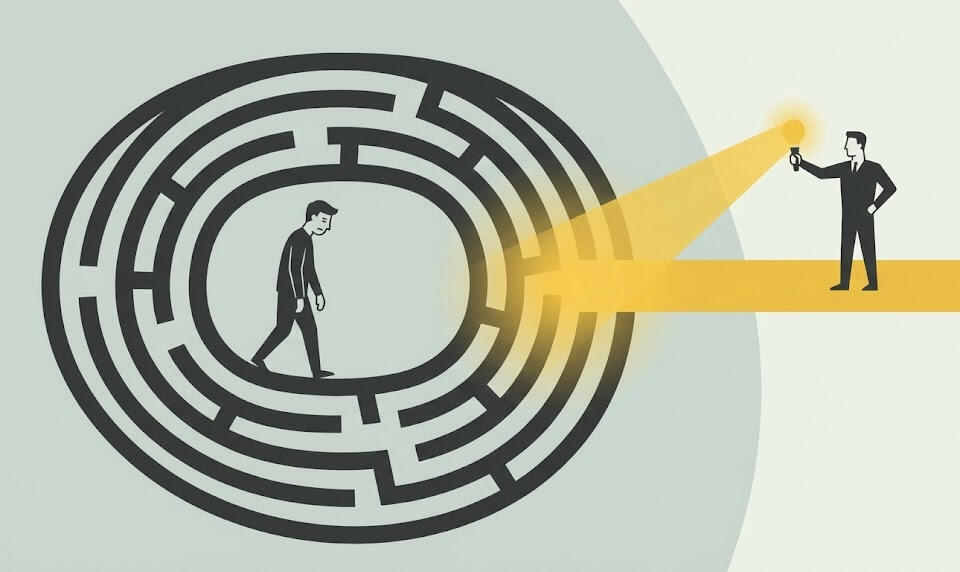
You don't need a sales pitch. You need to know if I can help you break the specific loop you are stuck in. And I need to know if you are ready to do the work required to break it.I don't accept every client. So before we talk, I ask you to complete a short application. It takes about 10 minutes and helps us both figure out if this is the right fit — before either of us invests more time.If it looks like we're aligned, I'll invite you to a 2-hour Introductory Deep Dive.Think of it as a working session rather than a sales conversation. We will slow down, put your bottleneck on the table, and examine the mechanics of what is holding you back. By the end of our time, we will both have clarity on whether we should continue this work together.There is no cost for this session, but I ask that you come prepared to be honest.
Method: The Brake Release Protocol

You Can't Drive With The Parking Brake On
Most Ambitious Creatives come to coaching with a "fix-it" mindset: "Something is broken. Give me the tool to fix it so I can get back to speed."You have likely tried this already. You pushed harder, analyzed your behavior, and optimized your routine. You treated your internal resistance like a flaw in the design — something to be edited out or overridden.And you discovered something strange: the harder you fought it, the stronger it fought back.That's because resistance isn't a malfunction. It's a protection. And you can't force a part of yourself into compliance by going to war with it.This is why your efforts brought results but not relief. One foot on the gas, one foot on the brake. That's not growth. That's friction — and eventually, burnout.
The Part That Doesn't Listen
Here's what nobody tells you about change: you have two minds. One sets goals, makes plans, and reads articles like this. The other runs beneath your awareness, and it doesn't care what you've decided. It only cares what you've learned.Somewhere along the way, this deeper mind must have learned that visibility leads to pain. Not as a thought, but as a prediction: if I do this, I will get hurt.So every time you approach the edge — the bold move, the real risk, the thing that could change everything — it pulls the brake. Generates procrastination. Manufactures perfectionism. Invents reasons to wait.You can understand this perfectly and still be stuck. You can journal about it for years, talk it through in therapy, and see the pattern with total clarity. None of it releases the brake, because insight lands in the thinking mind, and the brake lives somewhere that doesn't speak your language.
Why Most Approaches Miss
Traditional coaching tries to solve this with strategy and accountability. But you're not stuck because you lack a system. You're stuck because a part of you believes moving forward is dangerous.Most of talk therapy often tries insight — helping you understand the origins of the pattern. Valuable, but insufficient. Knowing why you're afraid doesn't make the fear release.Willpower tries to override it. Build new habits. Stack discipline on top of resistance. This works until it doesn't. You're just adding more gas while the brake stays locked.All of these approaches make the same mistake: they treat the feature as a flaw. You can't fix what isn't broken. You can only update what's outdated.
A Different Operating System
Your system already knows how to release the brake. There's a built-in process that can rewrite deep learnings like this at the root — not manage them, not override them, but dissolve them entirely. The catch is that it doesn't respond to logic. The prediction was installed through experience, and it can only be updated through experience.That's what we do. We help your system get the update it needs — not through more thinking, but through direct experience. When the danger finally registers as gone, the brake lets go.This is what I mean by moving from Force to Flow. We're not adding horsepower; we're releasing what's been holding you back. When that happens, the part of you that was pulling against you starts pushing with you. What felt like your biggest obstacle becomes available as fuel.
How We Work
We create a container where this shift becomes possible.1. We Slow Down: You cannot understand a pattern while you are running away from it. We create enough safety and spaciousness to stop, look, and see the mechanism clearly.2. We Stop Fixing: As long as you are trying to "fix" yourself, you remain in conflict. We move from judgment to curiosity. When the war ends, the wall comes down.3. We Reclaim The Energy: Resistance takes a massive amount of energy to maintain. When we integrate what you've been fighting, the tension releases. The energy you were burning on internal conflict becomes available for external creation.
The Result
Instead of it being a mindset shift you have to maintain through willpower, the result is a system-level shift that changes how you operate at the root.You stop trying to be calm and confident — and simply become it. You move from reactive striving to grounded power.Want to see what this looks like in practice?
Stories of The Shift
What happens when the brake releases.
These are real clients. Some details have been changed for privacy. What hasn't changed: the pattern, the shift, and the freedom on the other side.
1. The expert who was taking feedback as a fight.
The Stuckness: This client was brilliant at their craft, but they had a blind spot. Whenever things got tense or someone challenged their work, a wall went up. They didn't want to get defensive, but it happened faster than they could think. It was exhausting — for them and for the people trying to work with them.The Shift: We didn't work on on "communication tactics." Instead, we slowed down enough to catch that split-second moment where the wall goes up. We sat with the feeling that was driving the reaction until it lost its charge.The Freedom: The reflex is simply gone. Now, when tension arises, they don't have to "try" to stay calm. They can actually hear what’s being said, see the reality of the situation, and respond with a clear head.
2. The go-to person who was running on empty.
The Stuckness: This was the person everyone leaned on. They were successful, but they were secretly burnout-bound because they couldn't stop over-delivering. They thought they were just being helpful, but deep down, they were over-working to prove they were valuable. They were taking care of everyone else’s business to avoid facing their own needs.The Shift: We didn't make a list of boundaries to enforce. We went to the root: the belief that their worth depended on how much they carried for others. We looked at the fear of what would happen if they put themselves first, and we let that fear run its course.The Freedom: The heavy lifting stopped. They realized they could be supportive without sacrificing themselves. Saying "no" stopped feeling dangerous and started feeling natural. They finally had the energy to lead their own life, not just manage everyone else's.
3. The creator paralyzed by "fixing" themselves.
The Stuckness: This client had a vision for their next level, but they kept waiting until they were "ready." They were constantly analyzing their own flaws, treating their personality like a project that needed one more edit before it was good enough to ship. They were stuck in a loop of self-improvement that was actually self-rejection.The Shift: We stopped the project. We stopped trying to change the "messy" parts and learned how to just sit with them instead. We stopped fighting the reality of who they were.The Freedom: They described it as a huge weight lifting. The energy they used to waste on criticizing themselves became available for actually creating things. They stopped waiting to be perfect and started moving.
Your Story
You've seen the pattern by now. The details are different, but the shape is the same: a stuck loop, a hidden logic, a shift that changes everything.If you're curious what your version looks like — let's find out.
Meet Your Co-Pilot
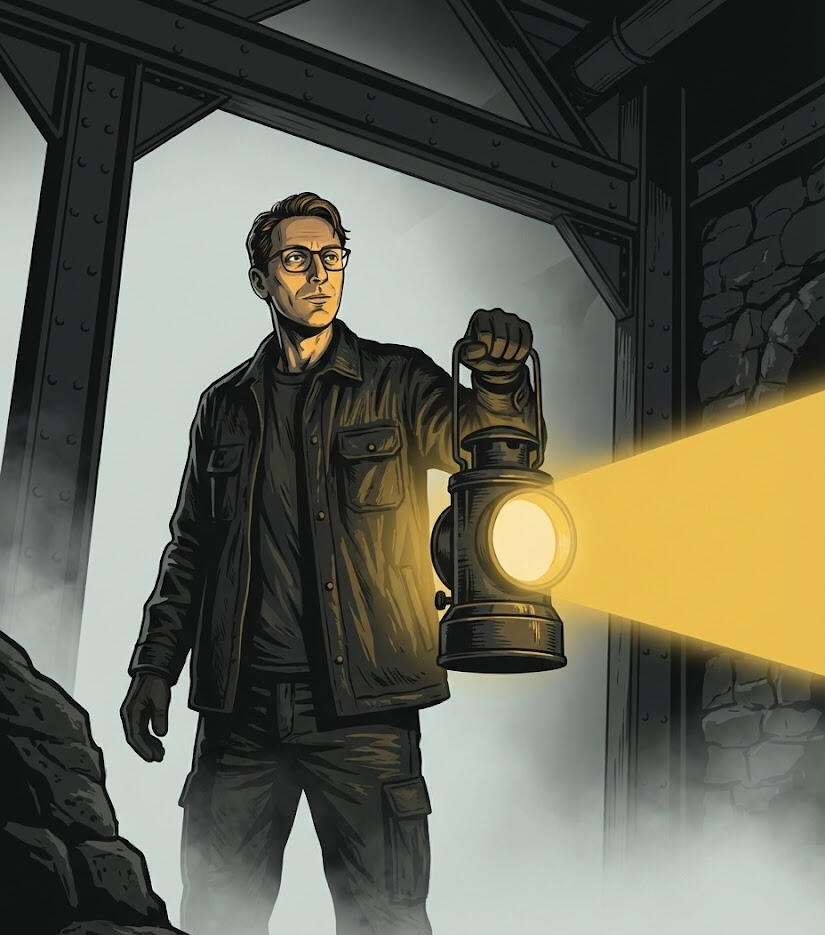
I have the mind of a strategist and the presence of a deep listener
My life has been a balance of two very different disciplines.
1. Professionally, I come from BizOps and Data Intelligence. My career was built on intellect: systems thinking, pattern recognition, and efficiency. I was trained to find the "right answer" and optimize the machine.2. Personally, my self-awareness journey began eight years ago when my son was born. Raising him was a wake-up call that intellect couldn't solve everything. To show up for my family, I had to dive into the deep end of growth work — attachment therapy, encounter groups, plant medicine deep-dives, and years of men’s work. This work was a rigorous dismantling of my own armor. It taught me how to sit with discomfort without running away, and how to hold space for big emotions without trying to "fix" them immediately.
I never treated these as separate lives. I often applied systems thinking to my personal growth, and the empathy of my inner work to my leadership.But the true test of this integration happened recently.
The Turning Point
I was leading a high-stakes strategy project using my "BizOps" brain. I built the perfect methodology and tried to push the team into alignment. I was controlling, perfectionistic, and operating in overdrive.It didn't work. I burned out, and the project moved on without me.In the past, I would have blamed the team or myself. But because of the inner work I had done, I recognized the failure as a signal.I worked with my teachers to look deeply inward. I realized that my need for control wasn't a "leadership style" — it was a protective pattern fueled by fear. By metabolizing that fear rather than acting on it, I gradually found a new way to lead.That's the core of what I do now — and why I founded Off the Brake: I help you recognize that your external blocks are often mirrors of your internal patterns.
From Engineering Machines to Navigating Humans
I treat personal growth with the same rigor I used to apply to business strategy — but with a different set of rules.In my corporate career, I dealt with Complicated Systems — machines, spreadsheets, workflows. When a machine breaks, you can fix it from the outside. You pull a lever, replace a part, and force it back into alignment.But you are not a machine. You are a Complex System.You have layers, history, and protective patterns that cannot be "forced" into compliance. If you try to engineer a human the way you engineer a machine, you get resistance.Most Ambitious Creatives feel stuck because they are trying to fix a complex human problem with a mechanical "fix-it" mindset.That is where I come in.My expertise lies in bridging the gap between your strategic mind and your deeper self:
I use my intellect to track the subtle logic of your resistance with the precision of an analyst.
I use my empathy and presence to help you make contact with the parts of yourself you have disowned and ignored.
We stop trying to "fix" you as if you were broken.Most coaching tries to sell you "add-ons" — new hacks and habits to patch a system you think is deficient. My work is not about installation; it is about reconnection.We go back to the source — the native intelligence, strength, and creative power you took offline to survive — and we turn the power back on.
The Person Behind the Process
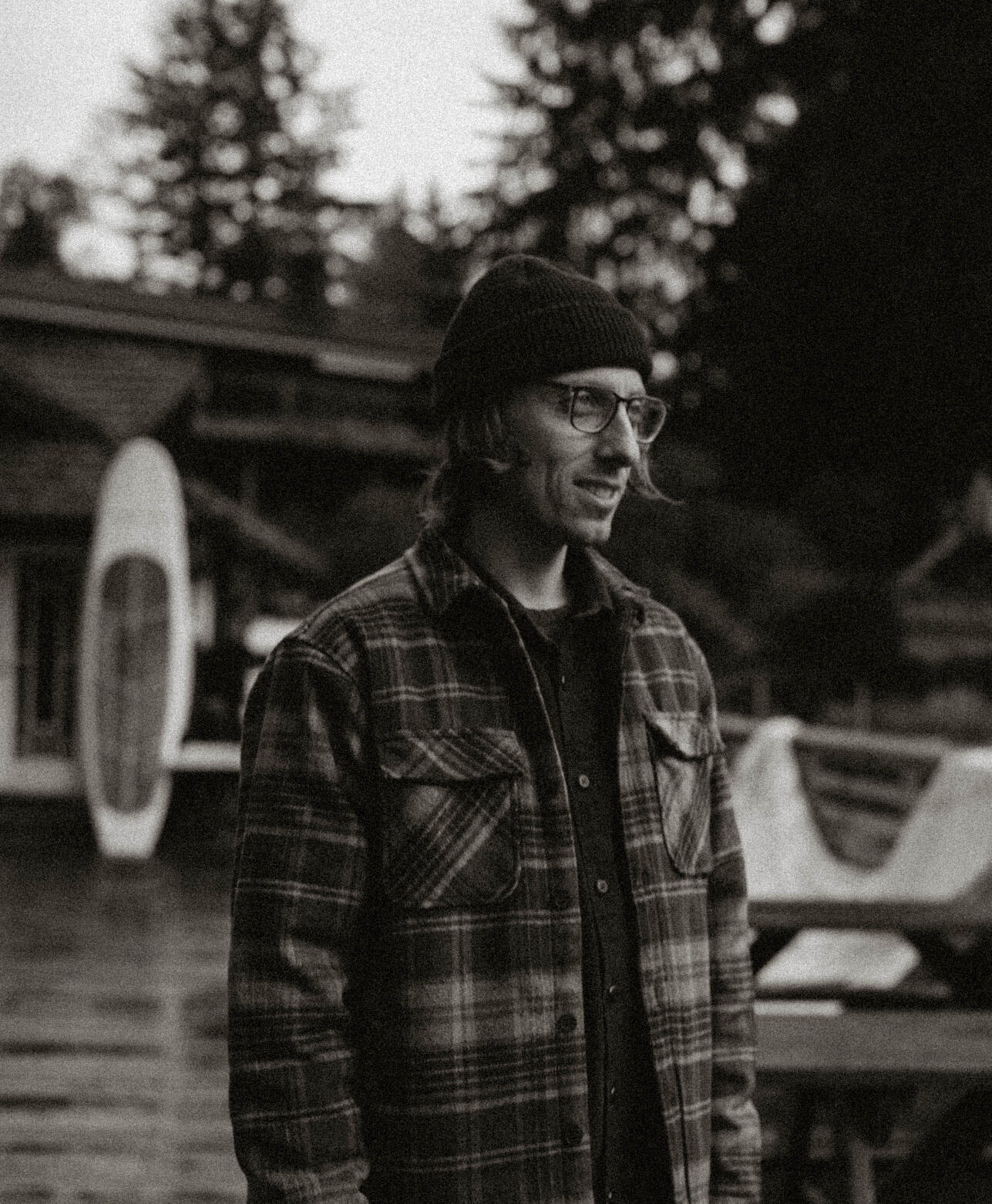
My name's Oleg and I am a lifetime student of this work. I don't have it "all figured out," but I am committed to the practice of being real in all of my roles:
The Partner: I have been with my partner for almost 15 years. I know what it takes to hold a relationship through all its seasons and grow within it. This partnership has taught me how to navigate rupture and repair, and how to stay present in conflict despite the discomfort.
The Immigrant: I built a life and family 10,000 km from home. This stripped away my external safety nets and forced me to develop deep internal resources. It taught me that often stability comes from your capacity to stand on your own two feet and meet life fully, exactly as it is.
The Father: Raising an 8-year-old boy without extended family nearby has been my greatest teacher in presence. Without a "village" to lean on, I had to learn how to actively listen and understand his world entirely on my own terms. It taught me that empathy isn't a soft skill; it is a discipline of curiosity.
The Musician: I play guitar and busk at local markets. This is my practice in public vulnerability. It is my way of exploring the edge of my creativity and sharing something raw with the world, without the safety net of needing it to be "polished" or "perfect."
If there is a through-line connecting the analyst, the father, and the coach, it is this: I am endlessly interested in what happens when we stop forcing our experience and start meeting it.Real growth doesn't happen when you successfully control your life. It happens in the space after the striving ends.If you are ready to explore that space, let's begin.
Oleg Tkhoryk, 2025
Rules of Engagement

1. Who qualifies for this work?
I filter for two specific criteria: your external profile and your internal capacity.The Profile: Ambitious Creatives stuck in the "Loop of Almost".I work with founders, experts, and creators who are talented and ambitious — yet stuck in a loop of "almost." You have the vision and the skills to be further ahead than you are. By all accounts, you should be scaling, leading, or creating at a higher level. But you're not.Every time you get close to the next summit, something pulls you back.You're here because you've realized that strategy isn't the bottleneck. You don't need another course or a better business plan. You need to dismantle the internal resistance — the overwork, the endless research, the self-improvement loops, the perfectionism, the over-giving — that keeps you playing smaller than you are.The Capacity: A Solid Foundation.To do this work, we need to look at your internal architecture. Think of your psychology like a house.I work with people whose foundation is solid. This means you know who you are. You don't feel like a different person depending on who is in the room. You can handle conflict without falling apart, and your relationships are generally stable, even if they feel limited.You are the person others rely on. You are functioning well, but the "walls" you built to protect yourself—your high standards, your need for control, your hyper-independence—have become too thick. You are structurally sound, but you are ready for a renovation. We are here to take down the walls that no longer serve you so you can expand.A Note on FitIf your foundation feels shaky, we cannot start a renovation. This work generates heat, and it requires a nervous system stable enough to hold intense emotion without collapsing.If you often feel empty, or if your mood and identity swing wildly from day to day, you need a different kind of support. Similarly, if you are in the middle of a storm—navigating chaotic relationships or using crises to cope with stress—this container is not safe for you. If you are navigating acute trauma or feel like your reality is slippery, please seek therapy first to stabilize the ground.We cannot build on top of a cracking foundation.
2. How is this different from therapy or traditional coaching?
Vs. TherapyTherapy is often about recovery—taking you from fragmentation or injury back to a stable baseline.My work assumes you're already stable. We start from health and move toward expansion. We're not healing a broken leg. We're training an athlete. We explore unconscious patterns not to "cure" them, but to liberate the energy they're holding.Vs. Traditional Coaching.Traditional coaching is often structural. It treats you like a project to be managed—assumes something is missing and tries to add more skills, discipline, or strategies to make you whole.My approach is different. We start from a radical premise: nothing is missing. You're not a problem to be solved. You're a high-functioning system blocked by its own protection. We don't force you toward a goal. We release the brake and reconnect you to the resourcefulness that's already there.
3. What happens in a session?
We work inside what I call a Developmental Container — a structured space designed to turn awareness into embodied change.The Compass: We start by naming what matters most to you. This might be a tangible change or an internal shift. Not a rigid "goal" to conquer, but a compass to orient our work.The Practice Ground: Between sessions, life is the lab. You live your days, noticing where things flow and where they tighten. You track the moments when old patterns, fears, or defenses show up.The Doorway: In our sessions, we use those moments as the entry point. We slow down and meet the parts of you that are protecting, avoiding, or overworking. Rather than override them, we get curious. We discover what happens when they're finally seen and included.The Integration: Each session weaves into a larger arc. Over time, this rhythm of attention becomes a permanent upgrade. You leave with new access to yourself — a steadiness and clarity that remains even when the pressure is on.
4. What is your fee?
The Fee
I work on a monthly retainer of $1,000 USD. This isn't for a set number of hours — it's for access. It secures your place on my roster and covers a complete developmental container designed for deep work.We start intensive: four 90-minute sessions per month for the first two months. From month three onward, we shift to two sessions per month as the work takes hold.Throughout, you have my ongoing attention between calls — guidance, reflection, and co-designed experiments to bring the work into your daily life.The Commitment
Because this is deep, architectural work, I require a 6-month initial commitment. After the initial term, we move to month-to-month for as long as the work remains vital.The Roster
To maintain the depth of attention this work requires, I cap my practice at a small number of active clients. If the roster is full when you inquire, I'll place you on a waitlist until a spot opens.


The True Mechanics of Change
Read time: 5 Minutes
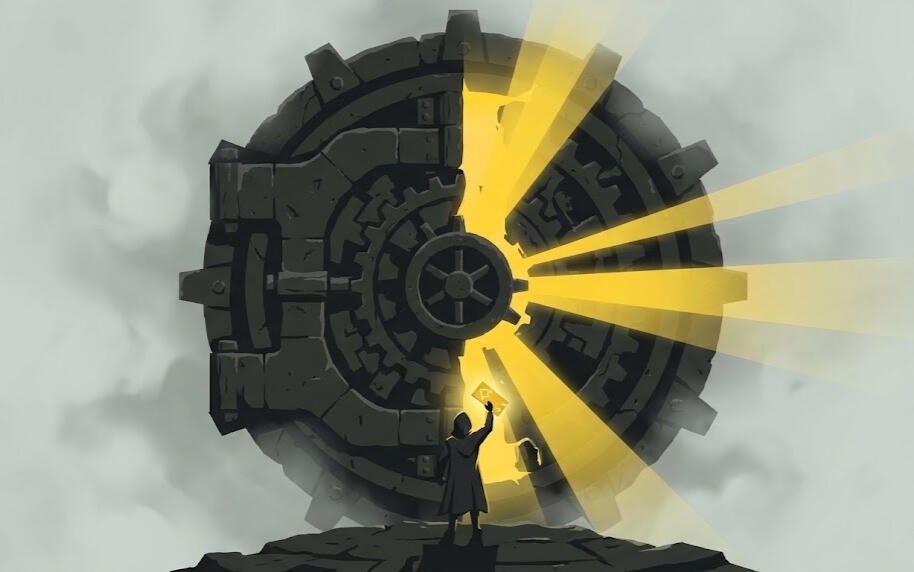
In the last piece, we established the diagnosis: you're not missing discipline, intelligence, or wholeness. You're not lacking trustworthiness or selflessness. The problem isn't that something is missing.But here's the maddening part: you probably already sense this.You've analyzed your patterns. You've journaled about your fears. You understand, logically, that launching that offer or sharing that creative work isn't actually going to kill you. You know you don't need more credentials, more approval, or to help everyone else before you get to your own thing.And yet. The brake stays on.Why?Because a part of your brain doesn't care what you think. It only cares what you feel. And right now, wired deep in your limbic system, is a felt prediction: if I do this, I will get hurt.To understand why your "mindset work" hasn't fixed this, we need to look at how your brain is actually built.
The Penthouse and The Basement
Think of your brain as a two-story building.Up top is The Penthouse. This is your conscious mind — the neocortex. It's smart, rational, ambitious. It's the part of you reading this right now, nodding along, setting goals, making plans. It says things like "Let's go! This is the year!"Down below, running in the dark, is The Basement. This is your limbic system — ancient, emotional, operating almost entirely outside your awareness. It doesn't care about your quarterly goals. It doesn't care about your five-year vision. It cares about one thing: keeping you alive.Years ago, the Basement learned something. It learned that being visible, being seen, being out there — that leads to pain. So it did what any good protection system would do. It installed a master override: the parking brake.Here's the problem: the building has no intercom.You can shout logic from the Penthouse all day long. You can journal. You can affirm. You can understand your patterns with perfect intellectual clarity.The Basement can't hear you. It's detected a threat, and it will override your ambition to keep you safe — no matter how many times the Penthouse explains that the threat isn't real anymore.
Why Knowing Isn't Enough
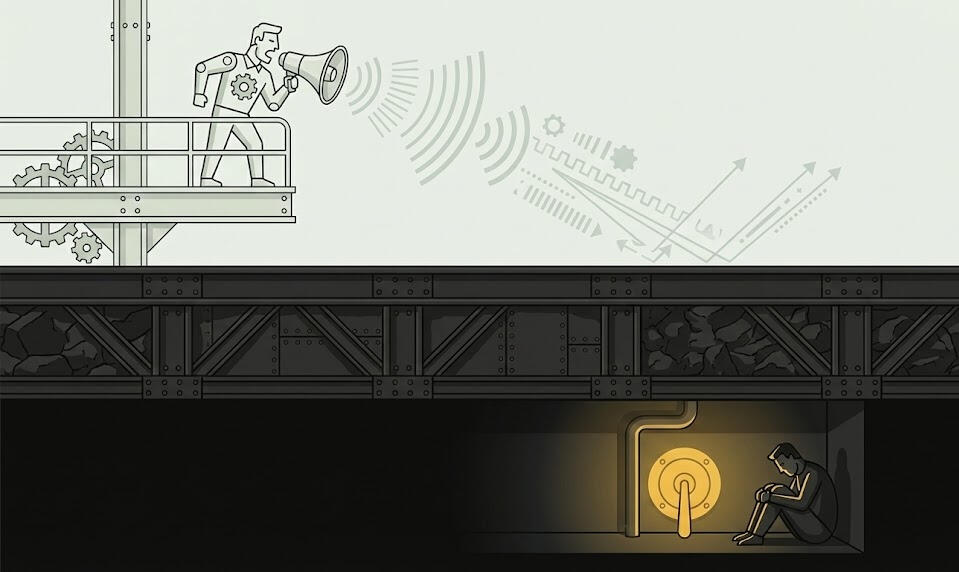
This is why insight alone doesn't create change.You can know that your fear of judgment is rooted in that one brutal moment in middle school. You can understand that your pattern of playing small comes from watching your parents struggle when they reached for more.That knowledge lives in the Penthouse. It's real. It's valid. It might even be healing to name.But the felt prediction — if I do this, I will get hurt — still lives in the Basement, untouched. The file hasn't been updated. The brake stays on.This is why you can read all the books, do all the talk therapy, have all the insights... and still find yourself stuck in the same patterns. The Penthouse has changed. The Basement hasn't.And the Basement is the one holding the brake.
What Actually Rewires The Basement
So how do you update a felt prediction that doesn't respond to logic?Here's the good news: your brain already knows how to do this. Neuroscientists have discovered that we have a built-in mechanism for rewriting old emotional learnings at the root. It's called memory reconsolidation — and it doesn't just manage or suppress the fear. It actually erases it.The key insight is simple: the Basement speaks the language of experience, not explanation.The felt prediction was installed through experience. It can only be updated through experience. When your nervous system feels — not just understands, but genuinely feels — that the old danger isn't present anymore, something shifts. The outdated map gets rewritten. The brake releases.And the change sticks — because you're not overriding the fear with willpower. You're dissolving it at the source.
Why You Probably Can't Do This Alone
Here's the tricky part.Your brain is specifically designed to prevent you from wandering into the Basement by yourself. The moment you get close to that deep, old fear, your defense mechanisms kick in. You get distracted. You rationalize. You suddenly feel tired and decide to do this tomorrow.This isn't weakness. It's your protection system doing its job.There's an old saying: you can't read the label when you're inside the jar. Your defenses are brilliant at keeping you away from the very material that needs to be touched for the brake to release.This is where having a guide changes everything.
The Invitation
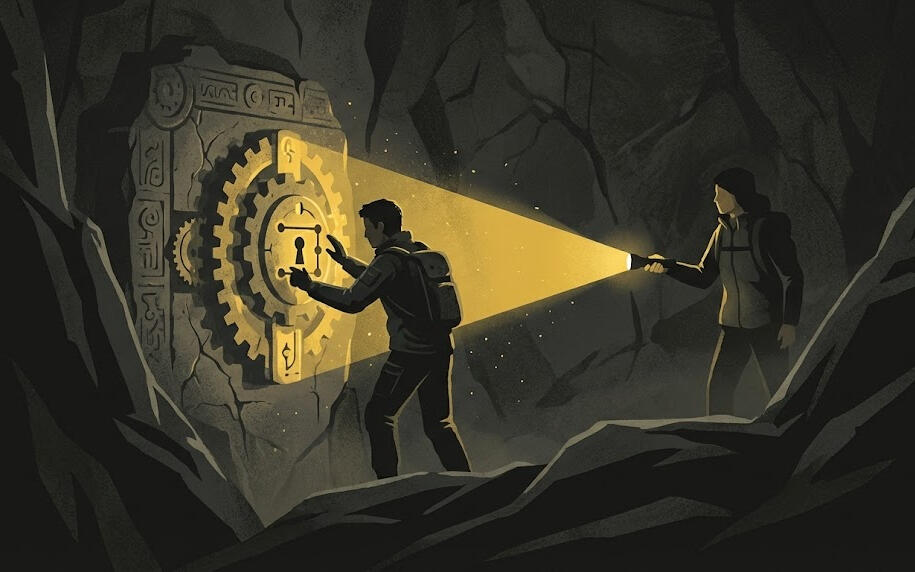
I work as a kind of co-pilot for this journey.My job isn't to fix you — because you're not broken. It's to help you access what you can't easily reach alone.
I hold the map: I bring a deep understanding of how this change mechanism works, so we don't get lost in the noise or spin in circles.
I hold the flashlight: When your defenses try to distract you (and they will), I notice, and I gently guide your focus back to where the real work is.
I watch the road: I witness your journey without judgment or agenda, helping you make sense of the feelings that usually overwhelm you.
I keep us moving: When it gets heavy, I offer my own stability and support to keep us steady. I’m in your corner, cheering you on.
And once we unlock that brake, I help you design the experiments to test your new freedom in the real world.
We don't force the change. We create the conditions for your brain to do what it already knows how to do: update the old map and let you accelerate.
Ready to release the brake?
If you're tired of fighting yourself — if you're ready to stop pressing the gas against a locked brake — let's begin.
Application Received
Thank you. I'll review what you've shared and respond within 48 hours.Not everyone who applies is the right fit for this work, and that's okay. If it looks like we're aligned, I'll invite you to a 2-hour Introductory Deep Dive — a real working session and not a sales call.
While You Wait
If you haven't already, these two pieces will give you a clearer sense of how I think about what keeps ambitious people stuck — and what actually shifts it.